

Workforce planning for healthcare organizations: a step-by-step guide
Workforce planning for healthcare helps healthcare organizations match the right people, skills, schedules, and staffing models to real patient demand. Done well, it supports patient care, improves workforce management, reduces staffing gaps, and gives healthcare leaders a clearer way to prepare for future needs. The pressure is real. The U.S. Bureau of Labor Statistics projects healthcare occupations to grow much faster than the average for all occupations from...
READ MORE
How Technology Failures Cause Process Breakdowns in Healthcare
Process breakdowns in healthcare often happen when technology, people, and workflows stop supporting each other. Health IT can improve patient care, communication, documentation, and operational efficiency. But when systems are unavailable, poorly integrated, overloaded with alerts, or not aligned with real clinical workflow, technology failures can expose weak processes and increase operational risk. This does not mean technology is bad for healthcare. The issue is usually not the...
READ MORE
IT Staffing vs. Managed Services: Which is Right for Your Organization?
IT staffing vs. managed services is a practical decision about control, accountability, cost, and delivery risk. IT staffing adds skilled people under your direction. Managed services shift responsibility for a function, service, or outcome to a provider. Neither model is automatically better. The right choice depends on whether your organization needs extra capacity, specialized capability, or accountable service delivery. Model Best fit Main advantage Main risk IT staffing...
READ MORE
How To Conduct an Operational Readiness Assessment
An operational readiness assessment helps an organization confirm whether people, processes, technology, data, support, and governance are ready before a launch, transition, handover, or major operational change. A strong operational readiness assessment does more than check boxes. It shows what is ready, what is not ready, who owns the gaps, what evidence proves readiness, and whether the organization can safely move forward. For U.S. businesses, government contractors, healthcare...
READ MORE
How to Manage Organizational Change Without Losing Productivity
To manage organizational change without losing productivity, leaders must protect focus, capacity, workflows, and employee confidence while the organization moves toward a new way of working. Most productivity loss during organizational change does not come from the change itself. It comes from unclear priorities, overloaded employees, inconsistent messages from managers, delayed decisions, broken business processes, and too many new tasks added on top of daily work. Change is...
READ MORE
7 Key Differences in Temp-to-Hire vs Direct Hire: Choosing the Right Staffing Solution for Your Business
Temp to hire vs direct hire is an important decision for any company trying to build the right team without wasting time, money, or productivity. The best staffing model depends on your hiring process, business needs, budget, urgency, and whether the role requires a long term commitment from day one. For businesses across healthcare, government, and commercial sectors, staffing is not just about filling a seat. It is...
READ MORE
How to Choose the Right Healthcare Technology Vendor
A healthcare technology vendor helps healthcare organizations select, implement, integrate, and support the systems they use for patient care, operations, data, compliance, and digital health transformation. Choosing the right healthcare technology vendor matters because the wrong choice can increase administrative burden, create EHR integration issues, slow clinical workflows, and reduce operational performance. For healthcare providers, the best vendor is not only a software company. It is a strategic...
READ MORE
Staff Augmentation vs Outsourcing: What’s the Difference?
Staff augmentation vs outsourcing is a common comparison for companies that need specialized skills, external talent, and flexible support without always hiring full time employees. Both models help businesses complete software development, project management, digital transformation, and non core functions, but they work in different ways. Staff augmentation adds augmented staff to your existing team, while outsourcing gives an outsourcing company or external service providers responsibility for a...
READ MORE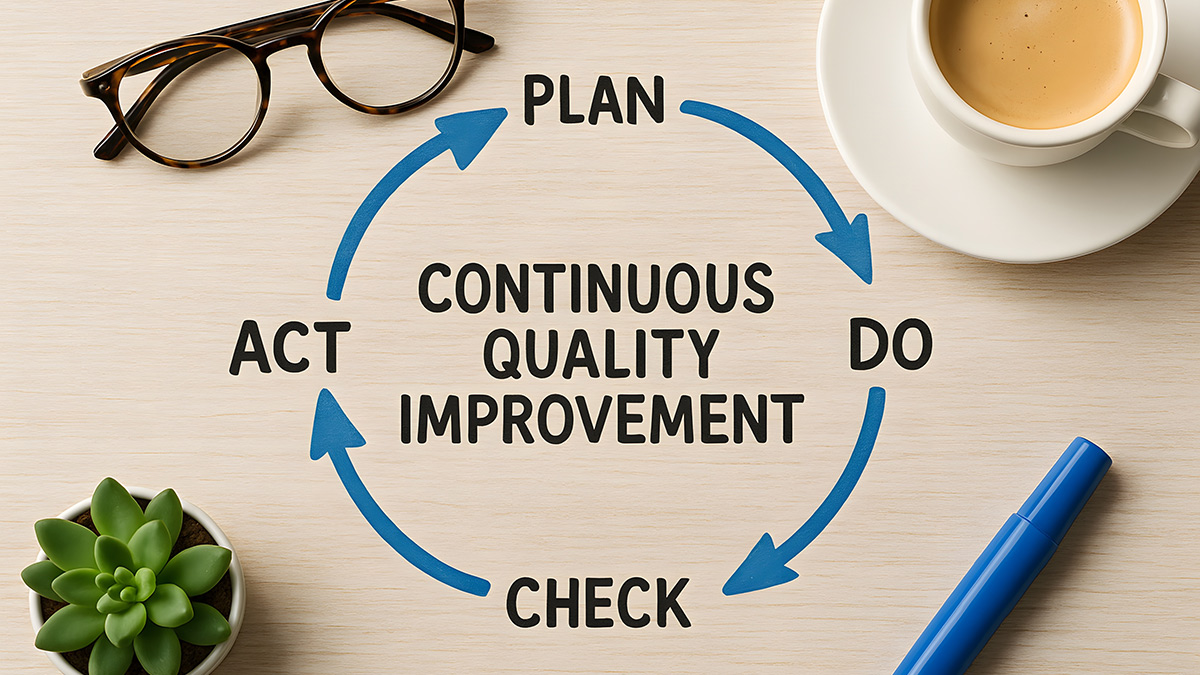
9 Core Principles of the Continuous Improvement Process: Key Benefits, Methodologies & Real-World Applications
The continuous improvement process is an ongoing effort to improve products, services, workflows, and business operations through small, measurable changes over time. For organizations in the USA, continuous improvement supports better quality management, increased efficiency, stronger customer satisfaction, and more consistent organizational performance. At its core, continuous improvement is not a one-time project. It is an ongoing process that involves gathering data, identifying problems, testing improvement ideas, and...
READ MORE
What Is Digital Transformation in Government Agencies?
Digital transformation in government agencies means using digital technologies, digital tools, improved processes, and data-driven systems to modernize how government services are delivered to citizens. For many government agencies, digital transformation is not only about replacing paper based processes with technology. It is about improving service delivery, reducing delays, strengthening communication, and helping government departments serve constituents more effectively. JuzSolutions supports this type of change by helping organizations...
READ MORE
11-Step Guide to Understanding Business Process Optimization (BPO): Improve Business Processes, Cost Reduction & Customer Satisfaction
Understanding business process optimization starts with knowing how business processes work, where they slow down, and how they can be improved to support better business operations. Business process optimization is the practice of analyzing, redesigning, and improving workflows so an organization can reduce waste, increase process efficiency, and deliver better customer satisfaction. For many companies, growth becomes harder when existing processes rely on manual tasks, repetitive tasks, outdated...
READ MORE
Business Process Automation using AI in Modern Organizations
Business process automation using AI is transforming how organizations handle daily operations, decision making, and scalability. From reducing operational costs to improving operational efficiency, AI-powered automation is helping businesses automate processes that were once time consuming and prone to human error. Modern organizations are no longer relying only on traditional automation. Instead, they are embracing AI-driven automation to optimize business processes, improve customer satisfaction, and gain a competitive...
READ MORE